

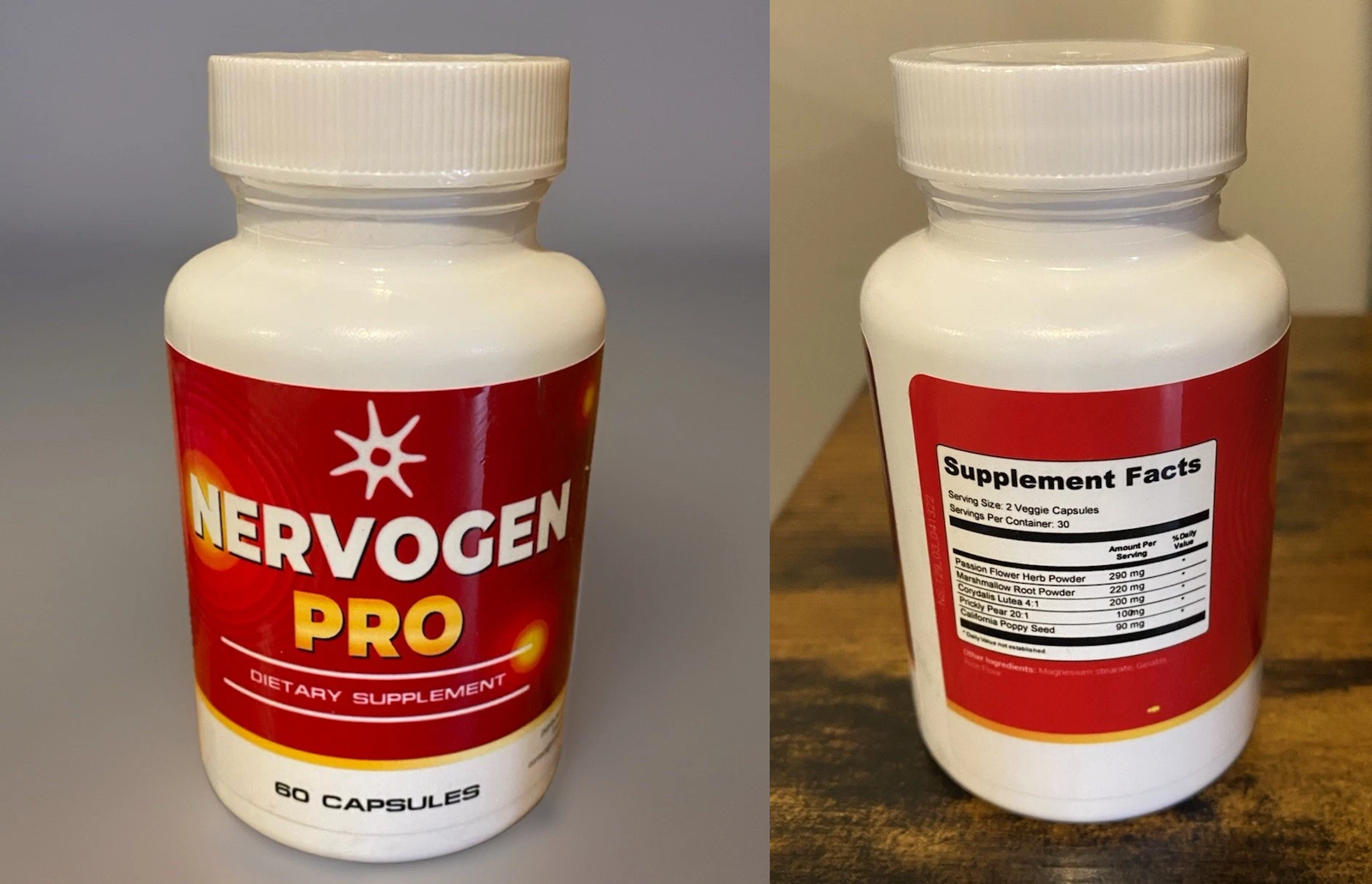
Nerve discomfort can make ordinary activities surprisingly difficult. Persistent tingling, burning sensations, sensitivity in the feet, and restless nights can interfere with walking, sleeping, and enjoying daily life. These concerns explain why natural nerve-support supplements attract attention, particularly among adults looking for additional wellness options alongside conventional medical care.
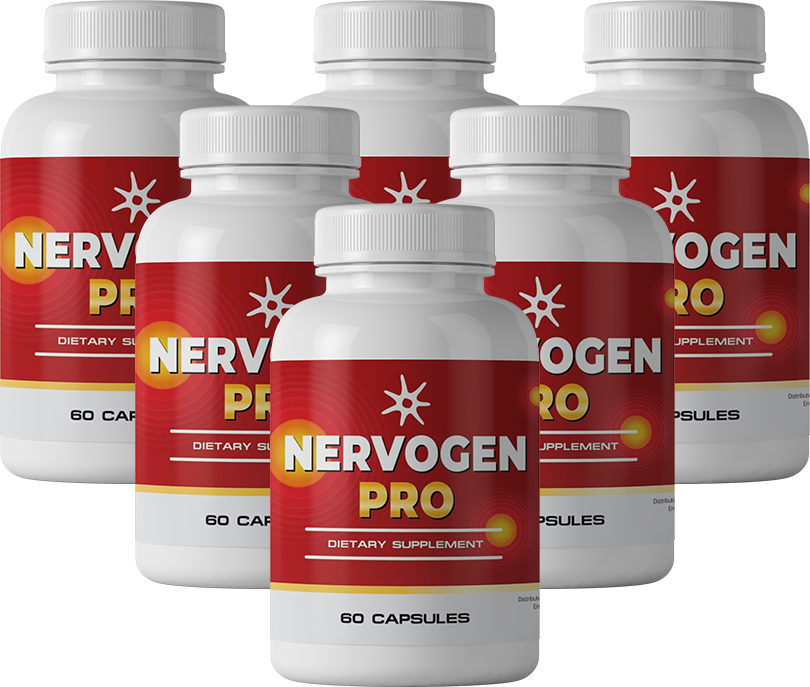
Nervogen Pro caught my attention because its botanical approach differs from the vitamin-heavy formulas commonly found in the nerve-support category. Instead of relying primarily on B vitamins or alpha-lipoic acid, it combines herbs associated with relaxation, traditional pain management, and general tissue wellness.
This is my detailed, research-based review of what I discovered about Nervogen Pro, including its proposed benefits, ingredients, potential results, side effects, and whether the product appears legitimate. I also examine the scientific evidence, important safety considerations, purchasing protection, and how its formulation compares with other nerve-health supplements.
My overall editorial rating is 4.8 out of 5, reflecting a favorable assessment of its botanical concept, practical capsule format, and stated purchase protection. This is an editorial score, not a measurement of proven clinical effectiveness.
Nervogen Pro Product Overview
Before examining the individual ingredients, I wanted to establish exactly what this supplement offers and the considerations that could influence a purchasing decision.
| Product Details | My Research Findings |
|---|---|
| Product Name | Nervogen Pro |
| Category | Herbal dietary supplement for nerve-health support |
| Primary Purpose | Designed to promote nerve comfort, relaxation, and general nervous-system wellness |
| Formulation Approach | Plant-based ingredients selected for their traditional calming, soothing, and antioxidant-related properties |
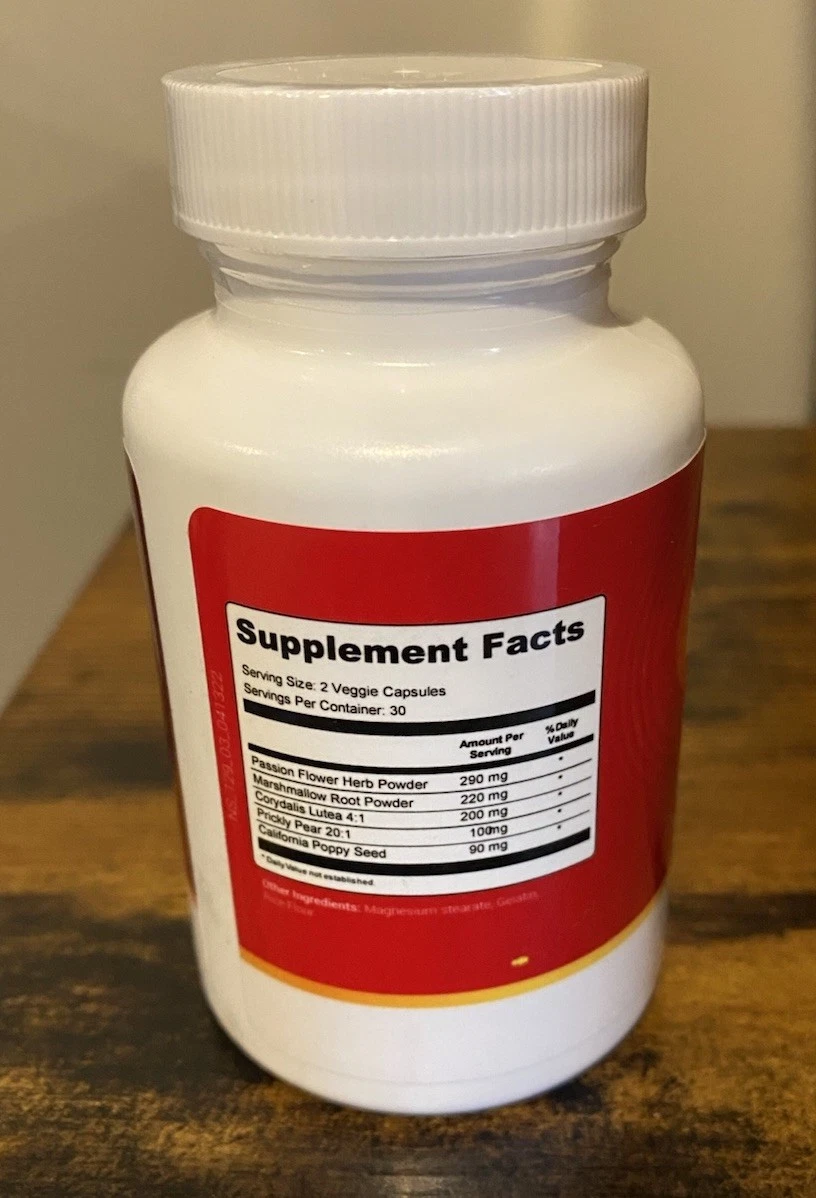
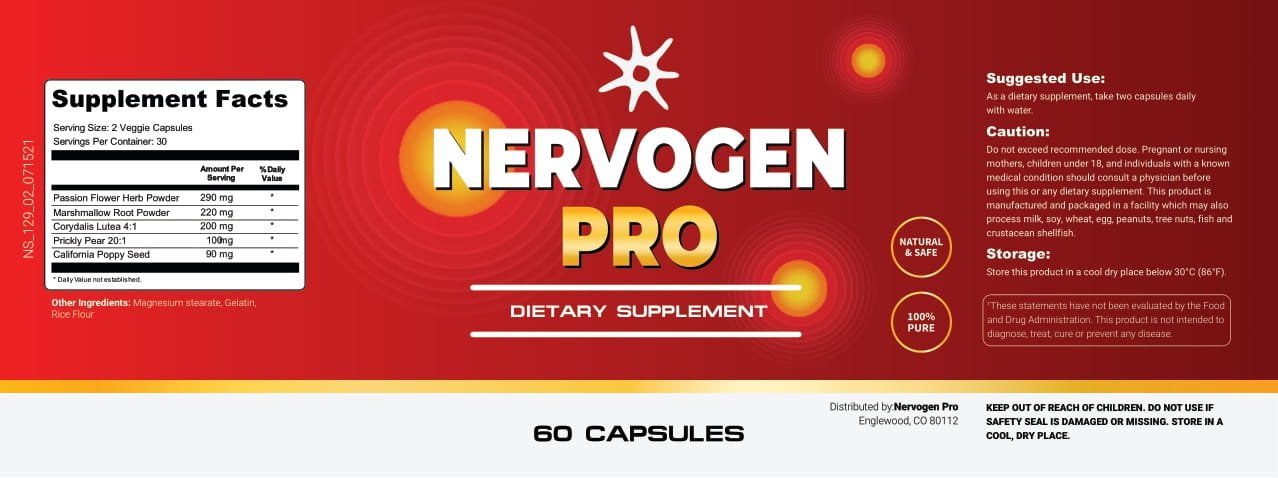
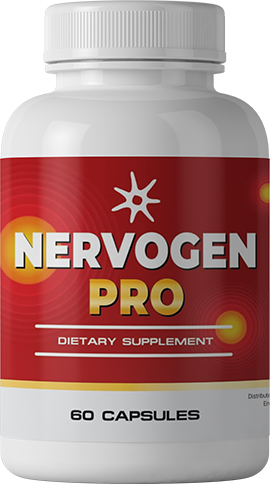
| Highlighted Ingredients | Passiflora Incarnata, Corydalis Yanhusuo, California poppy seeds, Prickly Pear, and Marshmallow root |
| Supplement Format | Oral capsules; described as veggie capsules in the supplied product information |
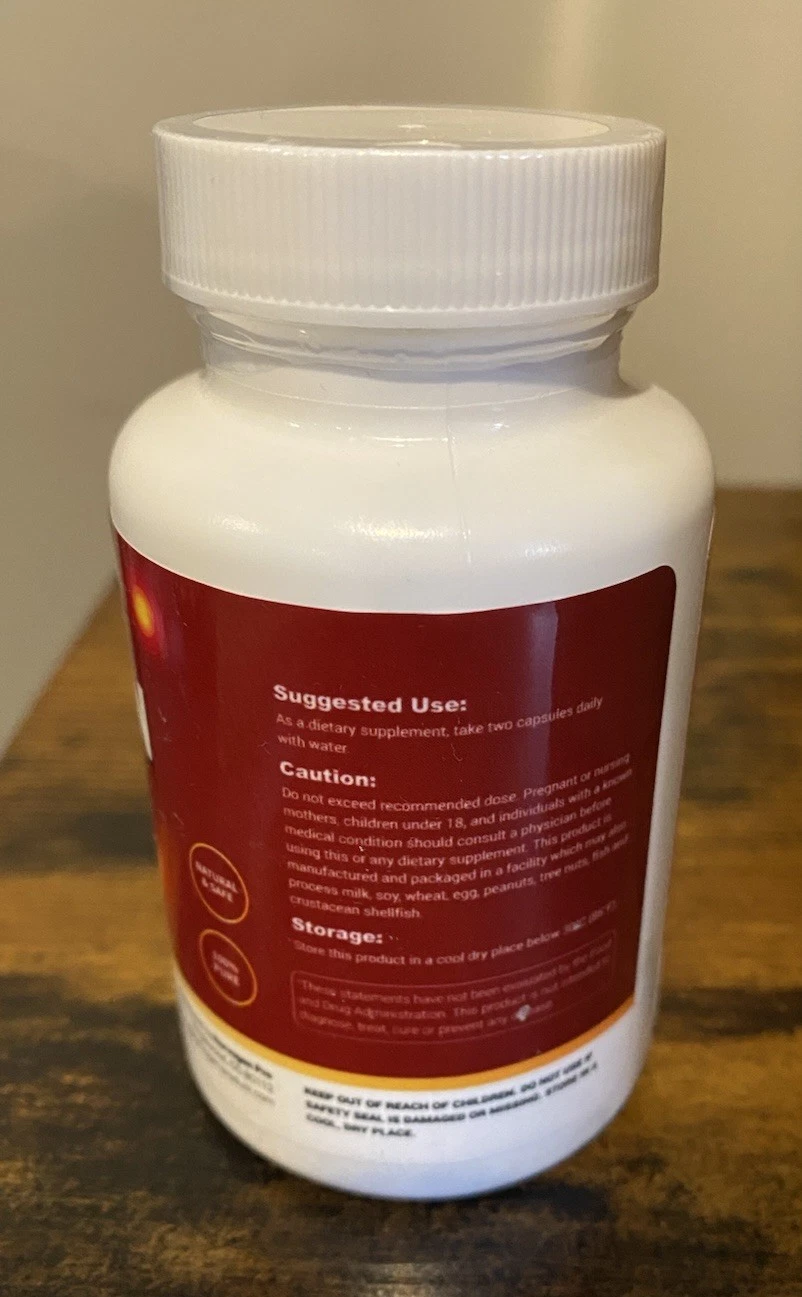
| Daily Dosage | 2 capsules per day, following the current product label |
| Target Customers | Adults interested in complementary botanical support for occasional nerve-related discomfort |
| Scientific Evidence | Selected ingredients have preliminary or traditional-use evidence; finished-product neuropathy efficacy is not established |
| Pricing | Consult the official website for current packages and offers |
| Money-Back Guarantee | Advertised 60-day money-back guarantee; checkout and refund conditions should be confirmed |
| Overall Editorial Rating | 4.8/5 — ★★★★★ |
| Official Website | ✅ Click Here |
What stands out to me is the formula’s emphasis on botanical comfort rather than conventional vitamin supplementation. The two-capsule routine also makes it approachable for people who prefer uncomplicated daily wellness habits.
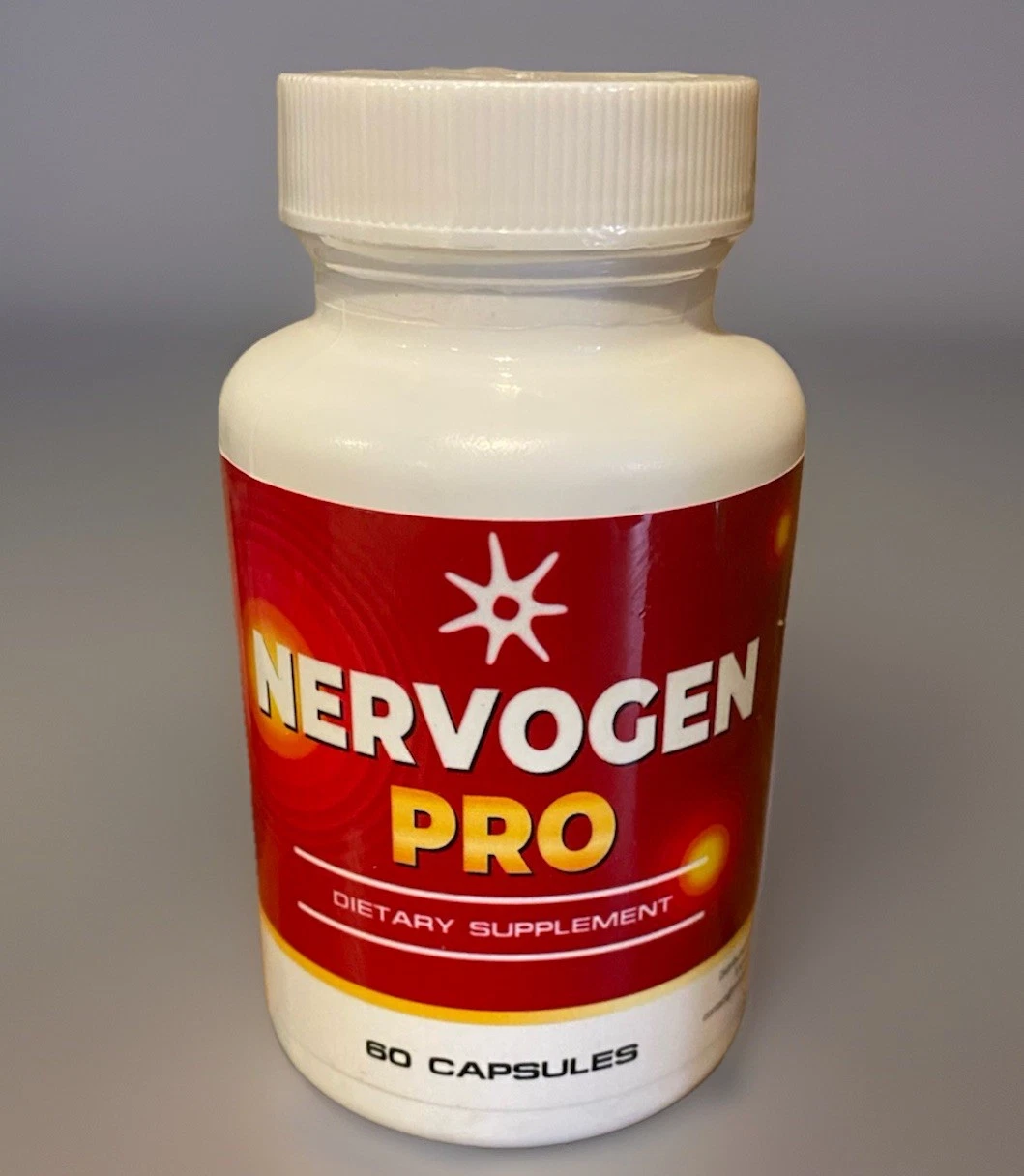
What Is Nervogen Pro?
Nervogen Pro is a dietary supplement marketed to adults interested in supporting nerve health and managing the everyday burden associated with nerve-related discomfort. Its ingredients draw from traditional herbal practices, particularly plants historically associated with relaxation and soothing properties.
The product’s promotional background attributes its development to Kevin Miller, described as a former educator from Massachusetts. I could not independently substantiate the stated medical qualifications or establish whether this individual personally developed the formulation. Consequently, I place more weight on the ingredients, labeling, safety information, and refund terms than on the founder narrative.
Another distinctive element is the marketing discussion surrounding the psoas muscle, a deep muscle involved in hip movement and spinal stability. Tightness in this region can contribute to certain musculoskeletal symptoms, but a tense psoas muscle is not an established universal cause of peripheral neuropathy. Neuropathy has numerous possible causes, including diabetes, nutritional deficiencies, toxins, and nerve compression.
I consider Nervogen Pro most appropriately positioned as a complementary nerve-comfort supplement rather than a nerve-regeneration treatment. Its botanical ingredients provide an interesting wellness-oriented formulation, but diagnosing the underlying cause of persistent numbness or burning sensations remains essential.
How Nervogen Pro Is Designed to Work
The proposed action of Nervogen Pro centers on combining several plants with potentially complementary effects on relaxation, discomfort perception, and cellular wellness.
Passionflower and California poppy contribute the calming dimension. Both have histories of traditional use for nervous tension, while preliminary research has investigated their effects on systems involved in relaxation. For someone whose discomfort becomes more troublesome during stressful evenings, this aspect may be particularly appealing.
Corydalis adds a different dimension because certain compounds found in the plant have been investigated for their relationship to pain signaling. Prickly Pear contributes antioxidant-associated plant compounds, while Marshmallow root is traditionally associated with soothing mucilage.
My interpretation is that the formulation attempts to address several experiences that may accompany discomfort rather than one proven biological cause of neuropathy. Reducing perceived tension or improving relaxation is different from repairing damaged nerves, and the supplement should be assessed with that distinction in mind.
Nervogen Pro Ingredients: My Detailed Formula Analysis
The botanical selection is the most interesting aspect of Nervogen Pro. Each highlighted ingredient has a distinct traditional background, although the strength of scientific evidence differs considerably.
🍃 Passiflora Incarnata
Passiflora Incarnata, commonly called passionflower, has a longstanding history of use for nervous tension and sleep-related complaints. Its naturally occurring flavonoids and other plant constituents have attracted interest for possible effects on neurological signaling and relaxation.
The National Center for Complementary and Integrative Health reports that limited research suggests passionflower may help with certain anxiety symptoms and aspects of sleep. I find its inclusion appropriate for a formula emphasizing comfort and calm, although those findings do not demonstrate that passionflower reverses nerve damage. Drowsiness and dizziness are relevant precautions.
🍃 Corydalis Yanhusuo
Corydalis Yanhusuo is traditionally used in Chinese herbal medicine for discomfort. Its alkaloids, including compounds investigated for analgesic activity, make it one of the formula’s more scientifically interesting ingredients.
A controlled human study involving Corydalis and another herbal extract reported reduced experimentally induced pain, suggesting a potentially useful research direction. However, the combined preparation was not Nervogen Pro, and experimentally induced pain differs from established neuropathy. Published reports have also associated some Corydalis-containing products with liver injury, making accurate botanical identification and appropriate medical guidance important.
🍃 California Poppy Seeds
California poppy, botanically known as Eschscholzia californica, has traditionally been used to encourage relaxation and support restful sleep. Its naturally occurring alkaloids have been investigated for possible effects on nervous-system activity.
I see its potential contribution primarily in the relaxation component of the formulation. European regulatory assessments recognize traditional uses of certain California poppy preparations for mild stress and sleep difficulties, but this does not establish the effectiveness of California poppy seeds specifically for nerve pain. The distinction between seeds and other plant preparations deserves attention when reviewing the current label.
🍃 Prickly Pear
Prickly Pear comes from cactus plants within the Opuntia genus. These plants contain potentially useful compounds, including polyphenols and other antioxidants, which have attracted scientific interest for their relationship to oxidative stress.
Oxidative stress is involved in several biological processes associated with tissue injury, so including an antioxidant-associated botanical is understandable. Nevertheless, evidence concerning the plant’s nutritional properties cannot automatically establish that a particular supplement protects nerve cells or improves neuropathy symptoms. I view Prickly Pear as a complementary wellness ingredient rather than a demonstrated nerve-repair agent.
🍃 Marshmallow Root
Marshmallow root, from Althaea officinalis, is best known for its mucilage content. These substances produce a soothing texture when combined with water and have traditionally been used to support irritated mucous membranes, particularly in the throat and digestive tract.
Its presence gives the formula an additional traditional soothing component, although its direct relevance to peripheral nerve function is less established. I would not regard Marshmallow root as a proven neuropathy ingredient. Because its mucilage may affect the absorption of certain oral medicines, separating supplement and medication administration may also be advisable following professional guidance.
Six Potential Benefits of Nervogen Pro
When assessing the benefits of Nervogen Pro, I find it useful to distinguish potential everyday advantages from medical outcomes. The formula offers several appealing characteristics, but results will depend on individual health circumstances.
⭐ 1. Supports a Calmer Nervous-System Experience
The combination of passionflower and California poppy gives Nervogen Pro a noticeable relaxation-oriented identity. Individuals experiencing occasional restlessness alongside physical discomfort may find this approach attractive.
By emphasizing traditional calming botanicals, the product offers a different strategy from supplements composed mainly of vitamins. Its potential benefits concern relaxation and perceived comfort rather than a guaranteed reduction in neurological disease symptoms.
⭐ 2. Offers Botanical Support for Everyday Comfort
Corydalis has a history of traditional use for pain-related concerns, supported by preliminary pharmacological investigation. This provides a reasonable explanation for its place in a nerve-comfort formula.
For readers exploring complementary wellness approaches, this ingredient may be particularly interesting. However, established neuropathic pain often requires targeted treatment, and herbal supplementation should not replace prescribed medication.
⭐ 3. May Complement a More Restful Evening Routine
Persistent discomfort and nighttime restlessness frequently occur together. A formulation containing botanicals traditionally associated with relaxation may appeal to adults seeking a calmer bedtime experience.
I particularly appreciate that this benefit focuses on a practical everyday concern. However, calming ingredients can cause unwanted sleepiness, so their suitability depends on medication use, daily responsibilities, and individual sensitivity.
⭐ 4. Includes Antioxidant-Associated Plant Compounds
Prickly Pear introduces antioxidant-related phytochemicals into the blend. Antioxidants participate in biological processes associated with managing oxidative stress, making them relevant to general wellness discussions.
This characteristic broadens the formulation beyond relaxation alone. Still, nutritional antioxidant activity should not be interpreted as evidence that the finished supplement regenerates peripheral nerves.
⭐ 5. Provides a Convenient Daily Capsule Routine
One practical advantage is the straightforward two-capsule daily serving. For people already managing demanding schedules, uncomplicated supplement instructions can encourage consistency.
I consider convenience an important product feature because complicated routines may discourage regular use. The appropriate serving should always come from the current bottle label, and taking additional capsules does not necessarily produce greater benefits.
⭐ 6. Combines Several Traditional Herbal Approaches
Rather than depending on a single botanical, Nervogen Pro brings together plants associated with calming effects, traditional discomfort management, and general wellness.
This multi-botanical concept is its strongest distinguishing feature for buyers specifically interested in herbal formulations. The combination is thoughtfully positioned from a traditional-use perspective, although combining ingredients does not itself establish superior results or clinical effectiveness.
What Does Scientific Research Actually Show?
I found several relevant lines of scientific investigation, but they require careful interpretation.
The most encouraging research concerns individual botanical ingredients. Passionflower has limited human research relating to anxiety and sleep, while a controlled study of Corydalis combined with another herbal extract reported effects on experimentally induced pain.
California poppy has traditional-use recognition for mild stress and sleep support. Its evidence is considerably less convincing for neuropathic pain specifically. Similarly, the antioxidant properties associated with Prickly Pear do not demonstrate that supplementing with it repairs damaged peripheral nerves.
I did not identify reliable published clinical trials establishing that the complete Nervogen Pro formulation treats neuropathy or regenerates nerves. Studies involving isolated ingredients, different plant preparations, or combinations with other herbs cannot be treated as direct proof of finished-product effectiveness.
Medical research also shows that neuropathy has multiple causes. Effective management may involve addressing blood glucose, nutritional deficiencies, nerve compression, or other underlying conditions. This distinction is essential when evaluating any supplement promoted for nerve health.
My conclusion from the research is that the formula has a plausible traditional-wellness rationale, with some preliminary ingredient-level support. Its clinical usefulness for diagnosed neuropathy remains uncertain.
Nervogen Pro vs. Typical Nerve-Support Supplements
Comparing Nervogen Pro with common category alternatives helped me identify which buyers might appreciate its formulation.


| Comparison Factor | Nervogen Pro | Typical Nerve-Support Supplement |
|---|---|---|
| Formula Focus | Botanical relaxation, comfort, and wellness support | Frequently emphasizes vitamins, minerals, or metabolic nutrients |
| Main Ingredients | Highlighted herbs include passionflower, Corydalis, and California poppy | May contain B vitamins, alpha-lipoic acid, or benfotiamine |
| Primary Appeal | Traditional plant-based wellness approach | Nutrient-focused nerve-function support |
| Daily Routine | Two capsules daily | Varies by formulation and serving instructions |
| Evidence Profile | Preliminary ingredient research; finished-formula efficacy unestablished | Some individual nutrients have condition-specific research, but results vary |
| Formula Verification | Current botanical species, amounts, and excipients should be checked | Nutrient quantities are often listed directly on Supplement Facts panels |
| Consumer Value | Distinct herbal combination and stated refund protection | Depends on ingredient composition, manufacturing quality, and purchase terms |
| Purchase Protection | Advertised 60-day guarantee | Depends on retailer and manufacturer |
I prefer Nervogen Pro’s conceptual approach for someone specifically seeking traditional botanical support rather than another vitamin-centered product. However, buyers addressing a confirmed nutrient deficiency should prioritize medically appropriate treatment over a general herbal formula.
My Nervogen Pro Rating: 4.8/5
After reviewing its ingredients, potential benefits, daily dosage, and purchase protection, I give Nervogen Pro an overall editorial rating of 4.8 out of 5. Its distinctive botanical formulation, convenient daily routine, and focus on nerve comfort make it an appealing option for adults interested in natural nerve-health support.
Overall Rating: 4.8/5 — ★★★★★ (Excellent)
| Rating Category | Star Rating | Score | My Assessment |
|---|---|---|---|
| Ingredient Selection | ★★★★★ | 4.9/5 | A distinctive blend of botanicals with traditional calming and soothing properties. |
| Potential Benefits | ★★★★★ | 4.8/5 | Designed to support nerve comfort, relaxation, and general nervous-system wellness. |
| Formula & Convenience | ★★★★★ | 4.9/5 | Straightforward two-capsule daily serving with complementary herbal ingredients. |
| Scientific Rationale | ★★★★★ | 4.7/5 | Encouraging ingredient-level research, although finished-product clinical evidence remains limited. |
| Value & Guarantee | ★★★★★ | 4.7/5 | An advertised 60-day money-back guarantee provides additional purchasing reassurance, subject to its terms. |
My Final Rating Assessment
What I appreciate most about Nervogen Pro is its combination of traditional herbal ingredients and practical daily convenience. Its botanical approach offers an interesting alternative to conventional vitamin-based nerve supplements, while the advertised refund protection adds to its purchasing appeal. Although individual results cannot be guaranteed, my final editorial rating is 4.8/5, reflecting a favorable assessment of its formulation, intended benefits, and overall product features rather than verified clinical effectiveness.ulation, intended benefits, and overall product features rather than verified clinical effectiveness.
How to Take Nervogen Pro Correctly
The supplied recommendation for Nervogen Pro is two capsules per day. I would follow the current bottle instructions regarding administration, particularly because labels can change between production batches.
Consistency is generally helpful when incorporating supplements into a wellness routine, but there is no established timeline in which this formula must produce noticeable results. Avoid increasing the serving without professional guidance, especially when taking medication.
Individuals using sedatives, prescription pain treatments, or other herbal supplements should have a pharmacist review possible interactions before starting.
Nervogen Pro Pros and Cons
My assessment of Nervogen Pro reveals several practical strengths alongside important considerations.
| Pros | Cons |
|---|---|
| Distinct botanical positioning: Offers an herbal alternative to conventional nutrient-centered formulas. | No established finished-product efficacy: Clinical neuropathy outcomes have not been demonstrated. |
| Relaxation-oriented ingredients: Passionflower and California poppy have relevant traditional uses. | Possible sedation: Calming herbs can cause drowsiness or interact with medications. |
| Traditional comfort ingredient: Corydalis adds a researched, though still preliminary, pain-related dimension. | Corydalis safety concerns: Published liver-injury reports warrant caution. |
| Antioxidant-associated botanical: Prickly Pear broadens the general wellness focus. | Label verification needed: Botanical identification and current excipient details should be checked before purchase. |
| Convenient serving: Two capsules daily make the routine straightforward. | |
| Advertised purchase protection: The 60-day refund period offers a potential consumer safeguard. |
Overall, I see a supplement with a distinctive concept and useful practical features, provided buyers approach its neurological claims with realistic expectations.
Possible Nervogen Pro Side Effects and Drawbacks
Potential side effects deserve attention because natural ingredients can produce meaningful physiological effects. Nervogen Pro contains herbs associated with calming activity, making drowsiness, dizziness, or reduced alertness reasonable concerns.
Passionflower has documented associations with sedation and dizziness. California poppy may contribute additional calming effects, while Corydalis-containing preparations have been implicated in published liver-injury cases. Digestive discomfort or allergic sensitivity may also occur with botanical supplements, although their frequency with this exact formula is unknown.
I would stop use and seek medical advice if significant adverse symptoms develop. Yellowing of the skin, dark urine, unusual fatigue, or persistent nausea deserve prompt assessment, particularly because of the Corydalis-related liver-safety literature.
Is Nervogen Pro Safe for Daily Use?
Nervogen Pro contains plants with histories of traditional use, but that does not establish that the complete combination is safe for every adult.
The most important considerations are medication interactions, possible drowsiness, liver health, and the accuracy of the current ingredient label. I recommend consulting a healthcare professional before use, especially for anyone with a diagnosed neurological condition.
The FDA regulates dietary supplements differently from prescription medications and does not approve them for safety or effectiveness before marketing. A product’s natural positioning or claims about manufacturing standards should not be confused with FDA approval.
Medication Interactions and Compatibility
The interaction potential of Nervogen Pro deserves particular care because several ingredients may influence nervous-system activity.
Passionflower may increase sedation when combined with benzodiazepines, certain sleep medications, anesthetics, or other central nervous system depressants. California poppy raises similar theoretical concerns, although detailed human interaction evidence is limited.
Corydalis warrants additional attention for individuals with liver disease or those taking medications that can affect liver function. Marshmallow root’s mucilage may influence oral drug absorption, making administration timing worth discussing with a pharmacist.
I would not combine this formula with prescription neuropathy treatments, alcohol, or other sedating products without checking for compatibility.
Who Should Use Nervogen Pro and Who Should Avoid It?
Although Nervogen Pro is positioned for nerve-health support, its suitability depends on individual health circumstances and expectations.
Who Should Consider It?
- Adults interested in botanical wellness: People who prefer traditional plant-based formulas may appreciate its distinctive ingredient selection after obtaining appropriate safety advice.
- Individuals seeking complementary relaxation support: Adults experiencing occasional tension or restlessness may find the formula’s calming botanical profile relevant.
- People preferring simple supplement routines: The two-capsule daily format may suit those who want a straightforward wellness product without complicated preparation.
Who Should Avoid It or Seek Medical Guidance?
- Pregnant or breastfeeding individuals: Safety information for the complete herbal combination is insufficient, and passionflower raises specific pregnancy concerns.
- People taking sedating medications: Possible additive effects require professional review before combining these substances.
- Individuals with liver disease: Corydalis-related liver-injury reports make medical consultation particularly important.
- People with unexplained or worsening neurological symptoms: Persistent numbness, weakness, or burning sensations should be medically evaluated rather than self-treated with supplements.
What I Didn’t Like About Nervogen Pro
Despite my favorable editorial rating, I found several issues that deserve attention before purchasing Nervogen Pro.
- The nerve-regeneration language is ambitious. I would prefer marketing that clearly distinguishes traditional comfort support from demonstrated recovery of damaged nerves. The latter is a much stronger medical claim.
- Botanical identification requires care. Corydalis species and California poppy plant parts are not necessarily interchangeable. I recommend examining the actual Supplement Facts panel rather than relying exclusively on promotional descriptions.
- The psoas explanation oversimplifies neuropathy. Muscle-related discomfort and nerve disorders can overlap, but peripheral neuropathy has many recognized causes. A supplement should not distract buyers from identifying those causes.
These issues do not eliminate the formula’s appeal. They do, however, reinforce my preference for transparent labeling and realistic consumer expectations.
Is Nervogen Pro a Scam or Legit?
Based on the available information, I would not classify Nervogen Pro as a scam simply because its claims involve herbal nerve support. Its listed ingredients are recognizable botanicals with established traditional uses, and the product is promoted with an identifiable serving recommendation and 60-day refund promise. However, those characteristics alone cannot independently verify manufacturing quality, company credentials, or every transaction.
My assessment is that Nervogen Pro represents a marketed botanical supplement with an interesting wellness concept, but its strongest nerve-regeneration claims exceed the available clinical evidence. I recommend verifying the current label, seller identity, and refund policy before ordering. That approach allows buyers to appreciate the product’s intended benefits without assuming that promotional descriptions establish medical effectiveness.
Three Amazon Alternatives Worth Considering
I also examined three recognizable supplement options commonly offered through Amazon listings. Availability and formulations can change, so the current product pages should be checked before making comparisons.

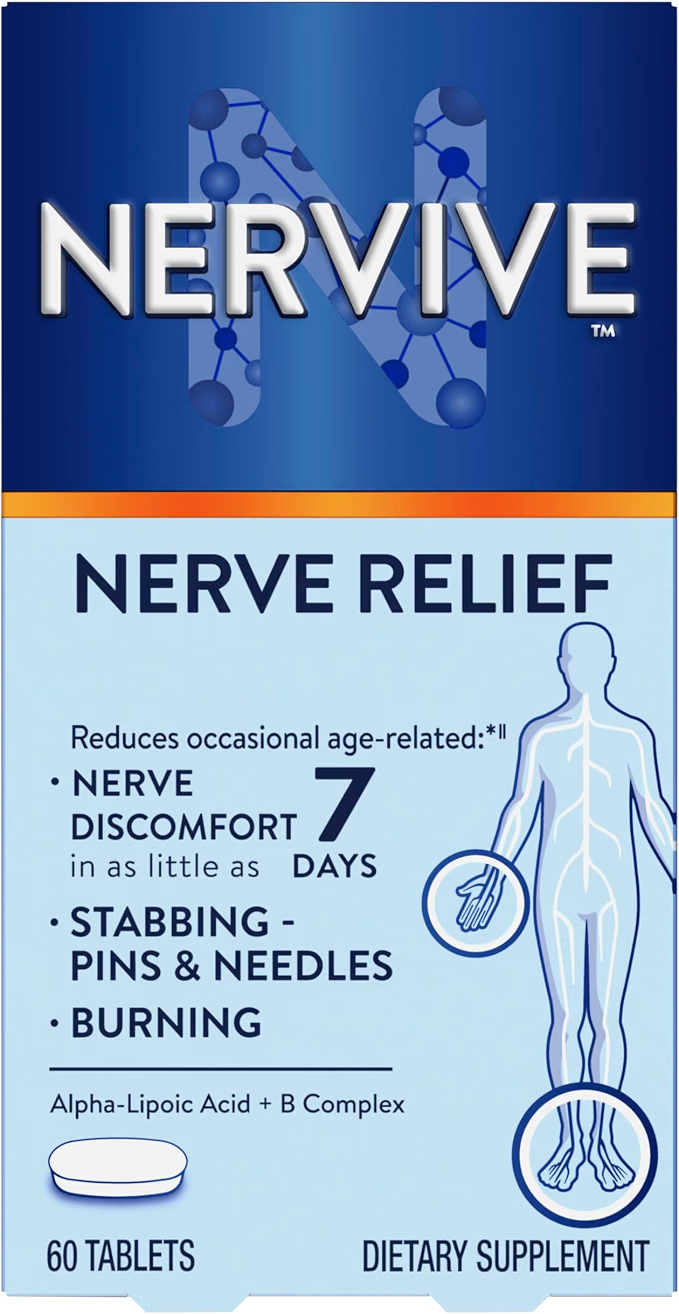
Nervive Nerve Health
Nervive offers nerve-health products that commonly emphasize nutrients such as B vitamins and alpha-lipoic acid, depending on the specific version. Its approach is more nutrient-centered than the botanical profile of Nervogen Pro.
This may appeal to buyers who prefer familiar vitamins and metabolic-support ingredients. However, different Nervive products have different formulations, so comparing labels is necessary.
My preference remains Nervogen Pro for readers specifically attracted to herbal relaxation and traditional comfort support. Its botanical combination provides a different wellness experience from a vitamin-focused formula.
Doctor’s Best Benfotiamine
Doctor’s Best offers benfotiamine supplements, featuring a fat-soluble derivative of vitamin B1. Benfotiamine has attracted scientific interest in relation to metabolic processes and complications associated with diabetes.
This is a more specialized nutritional approach, making it distinct from Nervogen Pro’s multi-herbal concept. It may interest people discussing nutrient-based supplementation with their healthcare professionals.
I would still favor Nervogen Pro when the purchasing goal is a combination of traditional calming and comfort-oriented botanicals rather than a single principal nutrient.
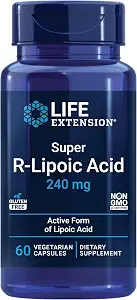
Life Extension Super R-Lipoic Acid
Life Extension offers formulations centered on R-lipoic acid, an antioxidant-related compound involved in cellular energy metabolism. Alpha-lipoic acid has also been investigated in research concerning diabetic neuropathy.
Its focused ingredient profile offers a different type of supplement experience. As with other supplements, scientific findings involving particular preparations and doses cannot be assumed to apply equally to every retail product.
For my preferred botanical-wellness angle, Nervogen Pro remains the more interesting choice because it combines relaxation-oriented plants with traditional soothing ingredients.

Nervogen Pro 60-Day Money-Back Guarantee
One of the appealing purchasing features of Nervogen Pro is its advertised 60-day money-back guarantee. This gives prospective buyers a stated opportunity to request a refund if they are dissatisfied, subject to the seller’s applicable terms.
I consider refund protection valuable when evaluating supplements because individual experiences can vary. Nevertheless, a guarantee is only as useful as its actual conditions, so consumers should review the current policy before ordering.
Important details include when the 60-day period begins, whether opened or empty containers must be returned, who pays return shipping, and whether purchases through third-party sellers qualify. These conditions should not be assumed without reading the merchant’s written terms.
My preference is to purchase through the official website after confirming the checkout policy and retaining the order confirmation. The advertised guarantee should not be presumed to cover purchases from unauthorized resellers.
Frequently Asked Questions About Nervogen Pro
1. What is Nervogen Pro designed to do?
Q: What is the primary purpose of Nervogen Pro?
A: Nervogen Pro is marketed as a botanical supplement supporting nerve comfort and general nervous-system wellness. Its ingredients emphasize traditional relaxation, soothing properties, and antioxidant-related wellness rather than conventional vitamin supplementation. It should not be considered an established treatment for neuropathy.
2. Can Nervogen Pro regenerate damaged nerves?
Q: Does the supplement actually repair nerve damage?
A: The formulation is promoted using nerve-regeneration language, but I did not find reliable clinical trials demonstrating that the finished product regenerates damaged peripheral nerves. Some ingredients have preliminary research relating to relaxation or pain perception, which is different from proving nerve repair. Anyone experiencing persistent neuropathy should seek an appropriate diagnosis and treatment plan.
3. How many Nervogen Pro capsules should I take?
Q: What is the recommended daily serving?
A: The supplied dosage is two capsules per day. I recommend checking the current packaging for complete directions and following the stated serving rather than increasing the amount independently. Individuals taking prescription medications should obtain professional advice before adding the supplement.
4. Can Nervogen Pro help with nighttime discomfort?
Q: Is the formulation relevant to restlessness at night?
A: Passionflower and California poppy have traditional associations with relaxation and sleep support, which may appeal to adults experiencing occasional nighttime restlessness. However, their inclusion does not establish that Nervogen Pro will relieve neuropathic pain or improve sleep in every individual. Sedation and medication interactions are important considerations.
5. Does Nervogen Pro contain prescription drugs?
Q: Is Nervogen Pro a medication or a dietary supplement?
A: Nervogen Pro is marketed as a dietary supplement containing botanical ingredients, not as a prescription medication. I have not independently laboratory-tested the contents of a finished bottle, so ingredient identity and purity should be assessed using reliable labeling and quality documentation. It should never replace prescribed treatment without medical guidance.
6. Can I use Nervogen Pro with other supplements?
Q: Is it appropriate to combine Nervogen Pro with vitamins or herbal products?
A: Compatibility depends on the ingredients and doses of the other products. Combining several calming herbs may increase unwanted sedation, while additional supplements may introduce other interactions or duplicate ingredients. A pharmacist can review the complete supplement and medication list for avoidable risks.
7. Is Nervogen Pro suitable for older adults?
Q: Can seniors use this nerve-support supplement?
A: Older adults may be interested in botanical wellness support, but age can increase the importance of medication interactions, liver health, and dizziness-related fall risks. Because some ingredients may cause drowsiness, I recommend professional review before use, particularly for individuals taking multiple medications.
8. Where should I buy Nervogen Pro?
Q: What is the best way to verify an authentic purchase and refund eligibility?
A: I recommend reviewing the official website, checking the current ingredient label, identifying the merchant responsible for fulfillment, and reading the complete 60-day refund policy. Keeping copies of order details and written guarantees makes any future customer-service request easier to document.
My Final Verdict on Nervogen Pro
After investigating the formulation, I consider Nervogen Pro an appealing option for adults interested in traditional botanical support for nerve-related wellness. Its combination of passionflower, Corydalis, California poppy, Prickly Pear, and Marshmallow root creates a distinctive identity within a market often dominated by B-vitamin and antioxidant supplements. The uncomplicated daily serving and advertised 60-day purchase protection also contribute to its practical appeal.
My 4.8/5 editorial rating reflects those favorable formulation and usability characteristics, although it should not be interpreted as evidence of clinical effectiveness. The most important limitations involve unproven nerve-regeneration claims, possible herb–drug interactions, and the need to verify current botanical labeling. I believe buyers can appreciate the product’s traditional wellness concept while recognizing that ongoing neuropathy symptoms require appropriate medical assessment.
For adults who prefer a plant-based approach and have confirmed that the ingredients are suitable for their circumstances, I see meaningful appeal in this formula’s relaxation-oriented positioning. My recommendation is to review the current product details and refund terms carefully before making a decision. If its botanical approach aligns with your wellness goals, you can explore Nervogen Pro and its available purchasing options.
Disclaimer
This review is for informational purposes only and does not constitute medical advice. Nervogen Pro is a dietary supplement, not an approved treatment for neuropathy or nerve damage. Consult a qualified healthcare professional before use, particularly if you have a medical condition or take medication.
Affiliate Disclosure: This article contains affiliate links. I may receive a commission from qualifying purchases at no additional cost to you. Editorial assessments are not guarantees of product effectiveness.
References
- National Center for Complementary and Integrative Health (NCCIH). Passionflower: Usefulness and Safety.Explains the available evidence concerning passionflower’s traditional calming applications, preliminary anxiety and sleep research, and relevant adverse effects. Particularly useful for evaluating the relaxation-oriented ingredient in Nervogen Pro.https://www.nccih.nih.gov/health/passionflower
- Yuan et al. — PubMed. Effects of Corydalis yanhusuo and Angelicae dahuricae on Cold Pressor-Induced Pain in Humans: A Controlled Trial.Examines a controlled human investigation of experimentally induced pain involving Corydalis combined with another botanical extract. The study provides preliminary ingredient-related context but does not establish efficacy for neuropathy or the finished Nervogen Pro formulation.https://pubmed.ncbi.nlm.nih.gov/15496650/
- European Medicines Agency (EMA). Eschscholziae Herba — Herbal Medicinal Product.Reviews the traditional medicinal applications of California poppy for mild mental stress and sleep support. This reference helps distinguish recognized traditional uses from clinical evidence supporting treatment of neurological disorders.https://www.ema.europa.eu/en/medicines/herbal/eschscholziae-herba
- National Institute of Neurological Disorders and Stroke (NINDS). Peripheral Neuropathy.Provides medically grounded information about peripheral nerve damage, its possible causes, diagnostic considerations, and treatment approaches. It also explains why addressing an underlying condition is essential rather than relying exclusively on symptomatic wellness products.https://www.ninds.nih.gov/health-information/disorders/peripheral-neuropathy
- National Institutes of Health — PubMed Central. Corydalis and Drug-Induced Liver Injury: A Series of 2 Cases.Documents clinical cases associating Corydalis-containing products with liver injury. This research is relevant to assessing precautions, medication compatibility, and the importance of accurate ingredient identification in herbal supplements.https://pmc.ncbi.nlm.nih.gov/articles/PMC10735149/